

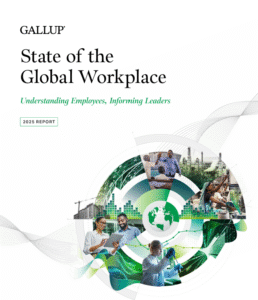
In a world where business is evolving faster than ever, the 2025 Gallup State of the Global Workplace Report offers a powerful reminder: it’s people—not just technology, strategy, or systems—that drive performance, resilience, and sustainable growth.
And right now, those people are under pressure.
Globally, only 21% of employees are engaged at work, a decline from 23% the year prior. Meanwhile, 62% of employees report experiencing stress “a lot of the day”, the highest Gallup has ever recorded. And perhaps most tellingly, manager engagement is slipping too—from 30% to 27%—as the weight of leading through uncertainty takes its toll.
Stress levels are at an all-time high, fuelled by multiple pressures including:
- The increasing impact of AI and technology, leading to cognitive overload as employees manage vast amounts of data.
- The cost of living crisis, alongside housing instability, causing financial stress for many.
- The complexities and isolation of remote working, where the boundary between personal and professional life often blurs.
- The constant political shifts and uncertainties, adding layers of stress both personally and professionally.
According to the Gallup report, 23% of employees globally report feeling burnt out very often or always, with job stress identified as a major factor impacting performance and engagement.
Key Findings Impacting Workplaces Globally:
- Employee burnout is rising globally, with 23% of workers feeling consistently stressed and overwhelmed, contributing to disengagement and higher turnover rates.
- Remote work challenges continue to affect employee connection and productivity, with 40% of remote workers reporting they feel disconnected from their colleagues and their company’s mission.
- Mental health and well-being are now a top priority, with employees increasingly seeking support for stress management. However, only 30% of employees globally report feeling their organisation is doing enough to support mental health.
- The AI revolution is contributing to cognitive overload, with workers being asked to process and manage exponentially more data, leading to increased stress levels. 37% of employees feel technology is a source of constant pressure in their work.
- Employee engagement remains a challenge, with only 15% of employees feeling a strong connection to their organisation’s mission and values, despite efforts to improve this.
- Job satisfaction is closely linked to workplace culture and leadership support. Gallup’s findings show that recognition and clear communication continue to be key drivers of employee engagement.
Understanding Stress and Building Resilience
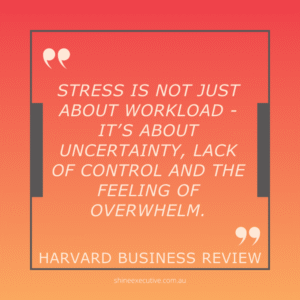
To effectively support our teams, we must first understand the underlying factors that contribute to stress and the importance of resilience. Stress isn’t just about workload—it’s about uncertainty, lack of control, and the feeling of overwhelm. Resilience, however, is our ability to bounce back, adapt, and thrive in the face of adversity. Leaders can foster resilience by:
- Encouraging open conversations about stress.
- Supporting employees with practical tools for managing workloads and balancing personal life.
- Recognising and celebrating progress, no matter how small.
What’s Working Well & Where Are the Danger Zones?
What’s working well:
- Employee engagement remains high when leaders prioritise clear communication and foster a sense of purpose. In fact, only 15% of employees worldwide feel strongly connected to their workplace mission, indicating a clear opportunity for improvement in most organisations.
- Positive leadership practices, such as recognising and appreciating employees, have a direct impact on job satisfaction and performance.
Where the danger zones are:
- Stress levels are rising, particularly among remote workers who feel disconnected and unsupported. This leads to disengagement, burnout, and lower productivity.
- Work-life balance is deteriorating, with 49% of workers reporting they are often overwhelmed by the demands of their jobs.
What Do We Need to Keep Doing?
- Prioritise soft skills training: As technology continues to shape the workplace, the need for empathy, communication, and problem-solving skills becomes even more important. Leaders must continue to invest in developing these skills at all levels.
- Encourage employee well-being: Offering support for mental health, fostering an open dialogue around stress, and providing resilience-building resources must remain at the forefront of our efforts.
What Do We Need to Do Better?
- Address remote work challenges: Leaders need to find better ways to engage remote workers, offering them a sense of belonging and connection to the team. This includes regular check-ins, virtual team-building activities, and promoting a balanced approach to flexible working.
- Focus on reducing workplace stress: We must better recognise the signs of stress and burnout in our teams and respond proactively. Encouraging breaks, setting realistic expectations, and providing support systems are all essential.
- Invest in leadership development: Providing training that helps leaders manage stress, support their teams effectively, and foster positive workplace cultures is non-negotiable. Leaders with strong emotional intelligence are proven to reduce workplace stress and improve engagement.
The Importance of Human Connection in Workplace Culture

In an increasingly tech-driven world, the power of human connection is more crucial than ever and must be prioritised as a key activity for a strong Workplace Culture.
People need leaders who can empathise, who can recognise when stress levels are too high, and who can create environments where employees feel supported and valued. These efforts will not only increase engagement but also help to build resilient teams that can overcome challenges together.
In closing, as leaders, our role is to understand the underlying causes of stress, provide the right tools to manage it, and create environments where people can thrive. By continuing to focus on developing both the technical and soft skills of our people, we’ll ensure they have the resilience to succeed—no matter what challenges lie ahead.
And when we get this right, everything becomes much easier.
The better it gets, the better it gets!
At Shine Executive, we love supporting organisations to create a high-performance culture by bringing out the best in their people. We can help your people succeed personally and professionally.
Our Neuroscience for Success, High Performing Teams, Sales Leadership and Psychological Safety workshops are here to help build cohesive, engaged, productive and effective teams.
We are here to help with speaking, consulting, training, conferences, coaching or offsite events and specialise in the following areas:
High Performing Teams | Leadership | Sales Training | EQ & Neuroscience | Financial Services Sales & Service | DISC Personality Profiles | Five Behaviours of Cohesive Teams | Positive Psychology | GROWTH Coaching | Executive Coaching | Stress Management & Resilience
Our bespoke people and performance solutions are created to meet your unique business needs, time available and working environment – so if you have something that’s important to you why not Book your free 30 minute call now to discuss. We’d love to hear from you.
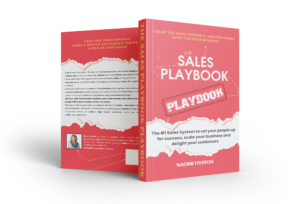
Ready for Sales & Service Excellence in your business? I can help you build YOUR Sales Playbook that will set your people up for success, scale your business and delight your customers. Visit www.shineexecutive.com.au/playbook to download your free excerpt and find out how to unlock your business’s potential.
Or contact us at naomi@shineexecutive.com.au or +61 423 936090.

Naomi Oyston has more than twenty years leadership experience within the Corporate, Financial and SME Business sectors. She has had extensive executive level success, with direct responsibility for leading Customer Service Excellence, Sales Performance, Performance Coaching, Organisational Culture, Productivity and Leadership capability within multiple major corporations.
Passionate, engaging and insightful, Naomi specialises in helping business leaders to create High Performing teams through a combination of mindset, toolkits and skills that are street proven to deliver results that matter.